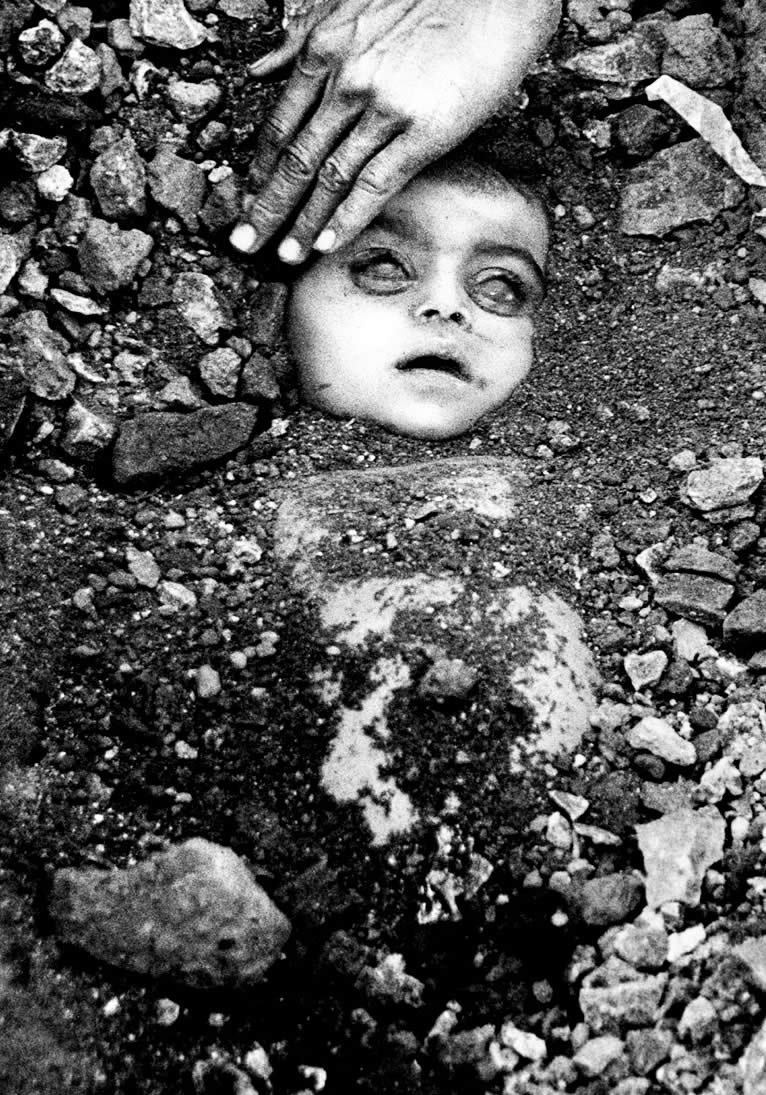
Yesterday I was scouring the web, looking for interesting things to post in my blog... It's usually a simple, yet tedious process... and rarely is it ever marred by anything I, myself, find disturbing, shocking and/or offensive... because let's face it... like most people, I am an angel and a demon (mostly demon) wrapped into one meat sack, and well, most people who know me, know, that it takes a special kind of fucked up to disturb, shock, and/or offend me... Well this did it... Needless to say, I will NO LONGER be buying ANY Dow Chemical products... I refuse to lend any financial support to a company who will not help the people that it has wronged... I know, by now you're asking "Fawn, what in the holy fuck are you talking about?", and you'd be right to ask... What am I talking about? I am talking about the BHOPAL GAS LEAK of 1984... Now you're asking me, "Why should I be concerned with something that happened 28 years ago...?". Well, I'll tell you, simply because as the old saying goes, "Those who fail to learn from the mistakes of their predecessors, are destined to repeat them.", I happen to be a firm believer in that statement, and from what I've read over the past couple of hours, Dow Chemical has learned NOTHING, but how to carefully, and quietly sweep this matter under the proverbial rug... It sickens me...

Dow shall be liable... I won't allow you to bury justice... Give the people of Bhopal what they want... Extradite the Butcher of Bhopal...
Now, without further adieu, a lengthy explanation...
The Bhopal disaster was an "Industrial Catastrophe" that occurred at a pesticide plant owned and operated by Union Carbide (UCIL) in Bhopal, Madhya Pradesh, India. Around midnight on the intervening night of December 2–3, 1984, the plant released
methyl isocyanate (MIC) gas and other toxins, resulting in the exposure of over 500,000 people. Estimates vary on the death toll. The official immediate death toll was 2,259 and the government of Madhya Pradesh has confirmed a total of 3,787 deaths related to the gas release. Other government agencies estimate 20,000-300,000 deaths. Others estimate that 8,000 died within the first weeks and that another 8,000 have since died from gas-related diseases.
Some 28 years after the gas leak, 390 tons of toxic chemicals abandoned at the UCIL plant continue to leak and pollute the groundwater in the region and affect thousands of Bhopal residents who depend on it, though there is some dispute as to whether the chemicals still stored at the site pose any continuing health hazard. There are currently civil and criminal cases related to the disaster ongoing in the United States District Court, Manhattan and the District Court of Bhopal, India against Union Carbide, now owned by Dow Chemical Company, with an Indian arrest warrant pending against Warren Anderson, CEO of Union Carbide at the time of the disaster. No one has yet been prosecuted.
The UCIL factory was established in 1969 near Bhopal. 50.9% was owned by Union Carbide Corporation (UCC) and 49.1 % by various Indian investors, including public sector financial institutions. It produced the pesticide carbaryl (trademark Sevin). In 1979 a methyl isocyanate (MIC) production plant was added to the site. MIC, an intermediate in carbaryl manufacture, was used instead of less hazardous but more expensive materials. UCC understood the properties of MIC and its handling requirements.
During the night of December 2–3, 1984, large amounts of water entered tank 610, containing 42 tonnes of methyl isocyanate. The resulting exothermic reaction increased the temperature inside the tank to over 200 °C (392 °F), raising the pressure to a level the tank was not designed to withstand. This forced the emergency venting of pressure from the MIC holding tank, releasing a large volume of toxic gases into the atmosphere. The gases flooded the city of Bhopal, causing great panic as people woke up with a burning sensation in their lungs. Thousands died immediately from the effects of the gas and many were trampled in the panic.
Theories of how the water entered the tank differ. At the time, workers were cleaning out pipes with water, and some claim that owing to bad maintenance and leaking valves, it was possible for the water to leak into tank 610. In December 1985 The New York Times reported that according to UCIL plant managers the hypothesis of this route of entry of water was tested in the presence of the Central Bureau Investigators and was found to be negative. UCC also maintains that this route was not possible, and that it was an act of sabotage by a "disgruntled worker" who introduced water directly into the tank. However, the company's investigation team found no evidence of the necessary connection. The Trade Union Report failed to mention that the investigation was totally controlled by the government investigators denying UCC investigators any access to inspecting the ill-fated tank.
The 1985 reports give a picture of what led to the disaster and how it developed, although they differ in details.
Factors leading to the gas leak include:
- The use of hazardous chemicals (MIC) instead of less dangerous ones
- Storing these chemicals in large tanks instead of over 200 steel drums.
- Possible corroding material in pipelines
- Poor maintenance after the plant ceased production in the early 1980s
- Failure of several safety systems (due to poor maintenance and regulations).
- Safety systems being switched off to save money—including the MIC tank refrigeration system which alone would have prevented the disaster.
The problem was made worse by the plant's location near a densely populated area, non-existent catastrophe plans and shortcomings in health care and socioeconomic rehabilitation. Analysis shows that the parties responsible for the magnitude of the disaster are the two owners, Union Carbide Corporation and the Government of India, and to some extent, the Government of Madhya Pradesh.